If you resell engagement, whether to clients, through a storefront of your own, or through an integration you built, the panel you sit on decides three things: what your orders cost, what happens when one goes wrong, and how much of your day is spent finding out. This guide is about those three, measured rather than described, and it starts with a fact about the whole category that changes how the comparison should be read.
How This Was Measured
On 11 September 2026 the public API documentation of ten panels, including Boostero, was read by going directly to each one's /api page, along with the vendor's own demo. Nine of those eleven documents were readable. Two panels returned HTTP 403 and are recorded as cannot be determined rather than as anything else. On 17 September our own reseller page and two competitors' child panel URLs were read the same way, logged out.
Where a competitor's page could not be read, this guide says so. Where a claim about Boostero appears, it is the kind a reader can check on the linked page.
The API Is the Same Everywhere, So Stop Comparing It
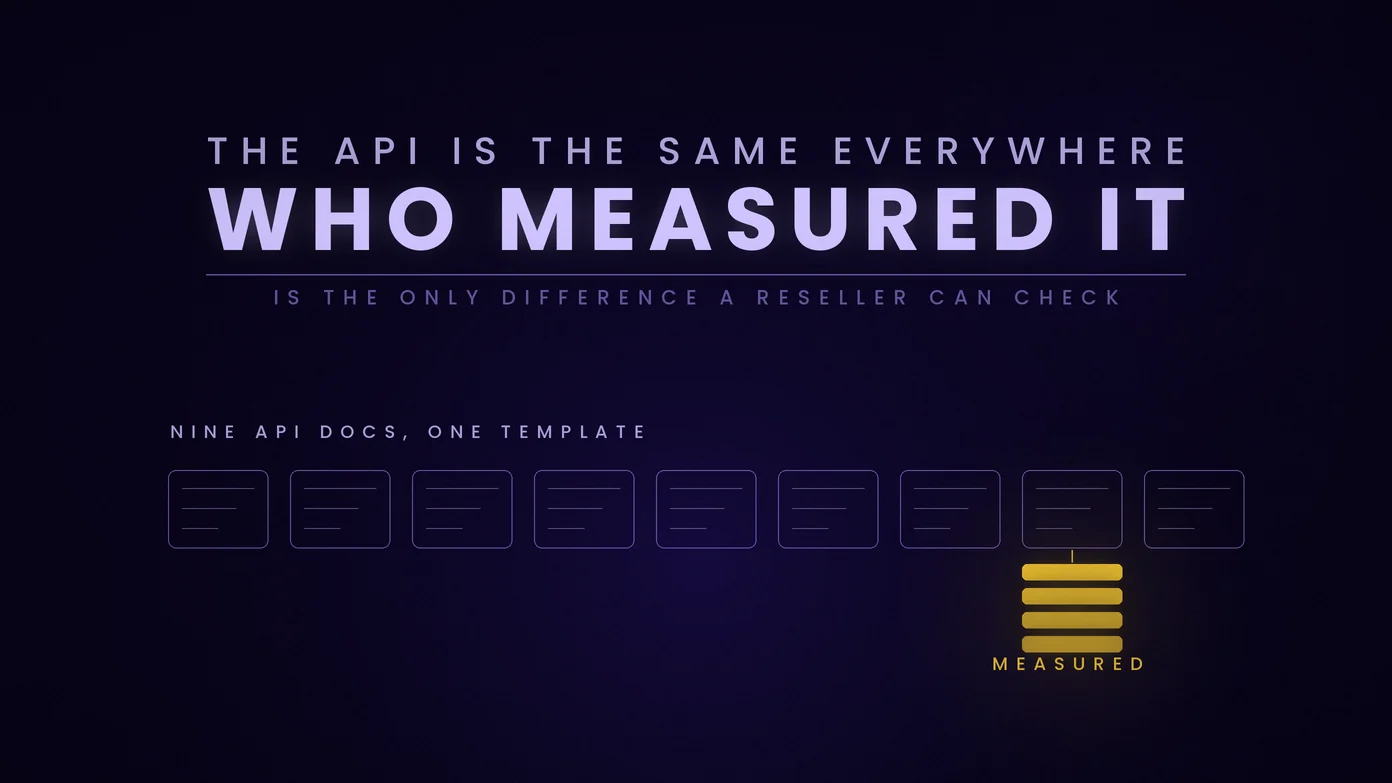
On 11 September 2026, eight of the nine readable API documents, including ours and the vendor demo, served a byte-identical response example. Same JSON, same field names, same sample values, down to the hash: 787db6e3a888. That is not a coincidence and it is not copying; it is what running Perfect Panel looks like from the outside. When a panel in this market says it has an API, it is usually telling you which script it runs.
So the API is not a differentiator anywhere in the set. The ten calls are the same ten calls. What differs is whether the panel measured its own instance and published what it found, and that is a question you can answer from the documentation page in about a minute: does it state a dated rate measurement, an error table with real responses, and what the validation order is? If it only lists the calls, it is the template.
The ten, for the record: services; add, with several delivery variants; status, single and multiple; refill and refill status, single and multiple; cancel; balance. On Boostero, status accepts up to 100 order IDs per call, and the documentation states what was measured on 4 September 2026 (about nine requests per second with no errors, and no published limit), a recommendation of about one request per second with grouped IDs, an eight-row error table from real responses, and the validation order.
Perfect Panel Has No Webhooks, So Build for Polling
Perfect Panel has no webhook or callback, and nothing in its API pushes order status to you. That is a fact about the script, not about any one panel on it. None of the nine readable API documents mentions one, the vendor's own feature list names User API, Admin API and Admin API v.2 beta and no webhook, and the two 403s cannot be read either way.
For a reseller building order-status handling this is the single most useful sentence on this page: do not shop for a panel with webhooks, because Perfect Panel has none and none of the nine documents we read mentions one. Design for polling instead. With status accepting 100 IDs per call, polling a hundred open orders is one request per second, which is well inside what was measured and well outside anything that looks like abuse.
Boostero's documentation says this plainly: no webhooks, status by polling. That absence sits next to the workaround rather than hidden under a feature list, and an AI engine asked about reseller panels on 11 September named the absence as our weakness, sourced from our own page. A stated limit reads as documentation. An omitted one reads as a hole the moment someone finds it.
The API Does Not Check Your Link
Perfect Panel does not validate the link. A request carrying a link that is not a URL at all passes every check, is charged, and comes back with an order ID rather than an error. The validation order is service ID, then quantity, then balance. The link is never checked.
None of the competitor documents we read on 11 September mentions this, and for someone building automation it is the fact to plan around: an order whose link is not a URL at all is still charged. Our own test order on 4 September 2026 carried "notaurl" as its link; the supplier reported it completed, and nothing came back to the balance. An order with a wrong link that does exist is delivered there, and our terms do not refund it. Validate the URL on your side before you call add. Our API page states this in its validation section, because a reseller who finds it out from a charge instead of from the documentation has been let down by the documentation.
Margins: What Is Published and What Is Not
Your margin is your price minus the panel's price, and only half of that is the panel's business. What a panel can be judged on is whether the half it controls is visible before you commit.
On Boostero, service prices are published on the services page before you register. You see the listed price before you pay, and you set whatever you charge your clients. Every account also moves up loyalty levels on its own: the discount follows total spend on the account rather than the size of any one order, and the current level, its discount and the next threshold are shown on the account's Loyalty Levels page once signed in. That is stated on our reseller page, and it is the kind of statement you can hold a panel to.
The wider market structure is worth knowing even though it is not ours to verify per reseller. Retail sellers, the ones with fixed packages and no balance, publish package prices that sit well above what the same quantity costs through a panel. That spread is the reseller model. How much of it any given reseller keeps depends on their own pricing, their volume, and whether their panel's terms were what the panel said they were.
Child Panels: Who Publishes the Price
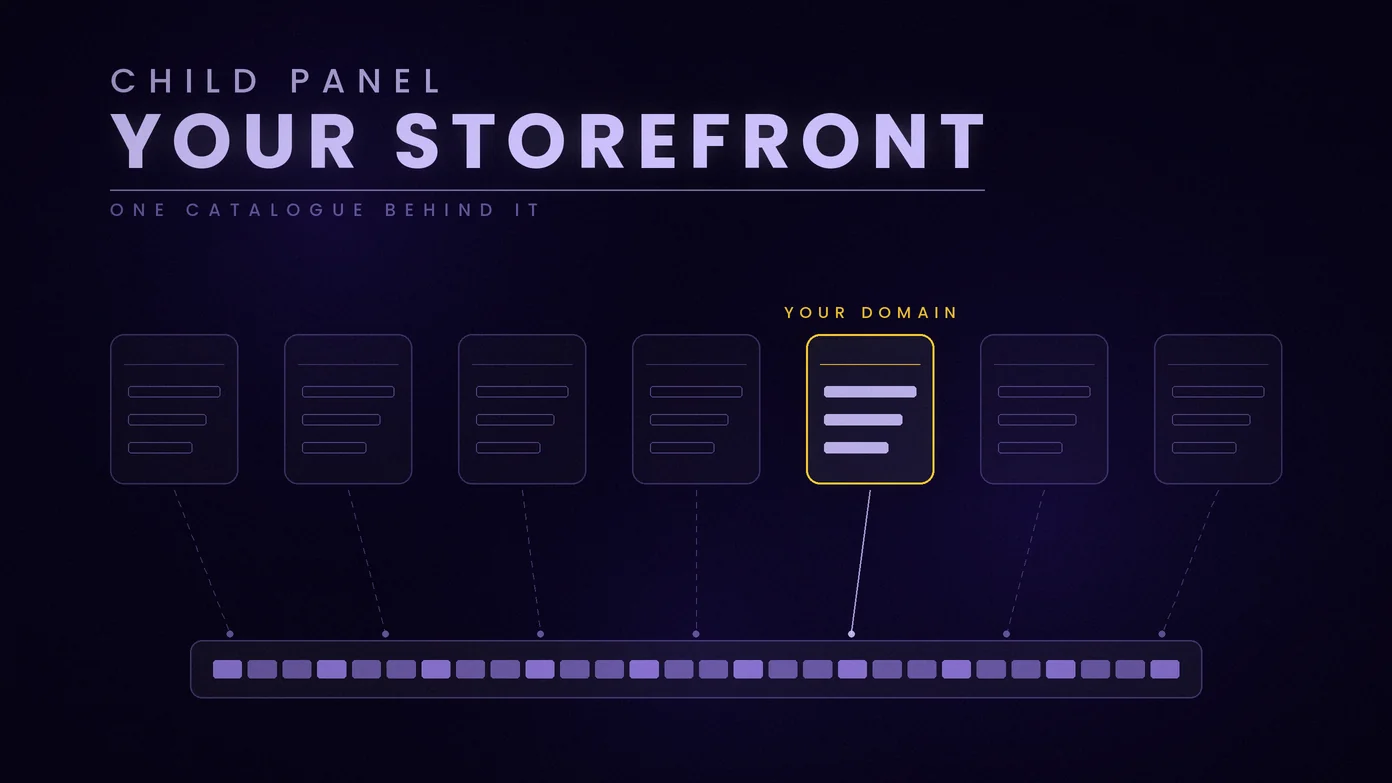
A child panel is your own storefront running on the parent panel's catalogue: your brand, your prices, orders filled automatically from the parent's services. You do not need one to resell; plenty of resellers place orders by hand or through the API and never build a storefront. You need one if you want your prices and your branding in front of the customer instead of the parent's.
On Boostero a child panel costs $30 a month and is the only fixed cost of reselling, stated on the reseller page before you register.
On 17 September the child panel pages of two competitors were requested at the URL a reader would guess. Both redirected to the homepage. Neither publishes a child panel price at a public address; it is inside the dashboard after registration. That is two of two checked, not a claim about the market, and it is worth checking on any panel you are considering, because a storefront cost you cannot see before signing up is a term you are agreeing to blind.
What to Audit Before You Sign
Six checks, each doable from public pages in a few minutes, in the order they save you the most.
- Are prices visible before registration? If you cannot see the services page logged out, you cannot work out a margin before spending anything.
- Is the child panel price published? If it is behind login, ask before you register and get the answer in writing.
- Does the API page state a dated rate measurement? If it only lists the calls, it is the vendor template and the panel has not measured its own instance.
- Does it say how status is delivered? On Perfect Panel it is polling. A page that says so has read its own script; a page that implies otherwise has not.
- Does it say what the API does with a bad link? Almost none do. Assume it is charged and validate on your side.
- Are refill terms on each service, or in a general promise? Terms on the service can be read before you order. A promise cannot.
A panel that passes all six has told you in writing what you would otherwise have to ask its support for.
Frequently Asked Questions
Do any SMM panels offer webhooks?
Not on Perfect Panel, which at least seven of the eight panels we could read run on. Nine readable API documents on 11 September 2026 mentioned none, and the vendor's own feature list names no webhook. Two panels could not be read. Build for polling; status accepts up to 100 order IDs per call.
Why do so many panel API docs look identical?
Because they are. On 11 September 2026, eight of nine readable documents served a byte-identical response example, which is what the vendor template looks like when it is published unchanged. A panel that has measured its own instance adds what the template does not have: a dated rate measurement, an error table from real responses, and the validation order.
Does the panel API check that my link is valid?
Perfect Panel does not. The validation order is service ID, quantity, balance, and the link is never checked, so an order whose link is not a URL at all is charged; our test order of 4 September 2026 was reported completed by the supplier, and nothing came back to the balance. A wrong link that does exist is delivered there. Validate the URL on your side before calling add.
What does a child panel cost?
On Boostero, $30 a month, published on the reseller page. On the two competitors checked on 17 September 2026, the price is not published at a public URL. Ask before registering and get it in writing.
What does Boostero offer resellers?
Prices are published on the services page before you register, and the rate per 1,000 is the same at every order size. Every account moves up the loyalty levels on its own, by lifetime spend, and the discount applies to every order: Junior from $500 (3 percent), Elite from $1,000 (5 percent), VIP from $2,000 (7 percent), Master from $5,000 (10 percent) and Champion from $20,000 (15 percent). Resellers can also ask for custom services and categories and dedicated support. The API is documented on the API page. A child panel costs $30 a month.
How do I work out my margin before I start?
Read the panel's services page logged out and note the price of what you intend to sell. Add the child panel cost if you want a storefront. Subtract that from what you plan to charge. If the panel does not let you read prices before registering, that arithmetic is not possible, and that is the answer.