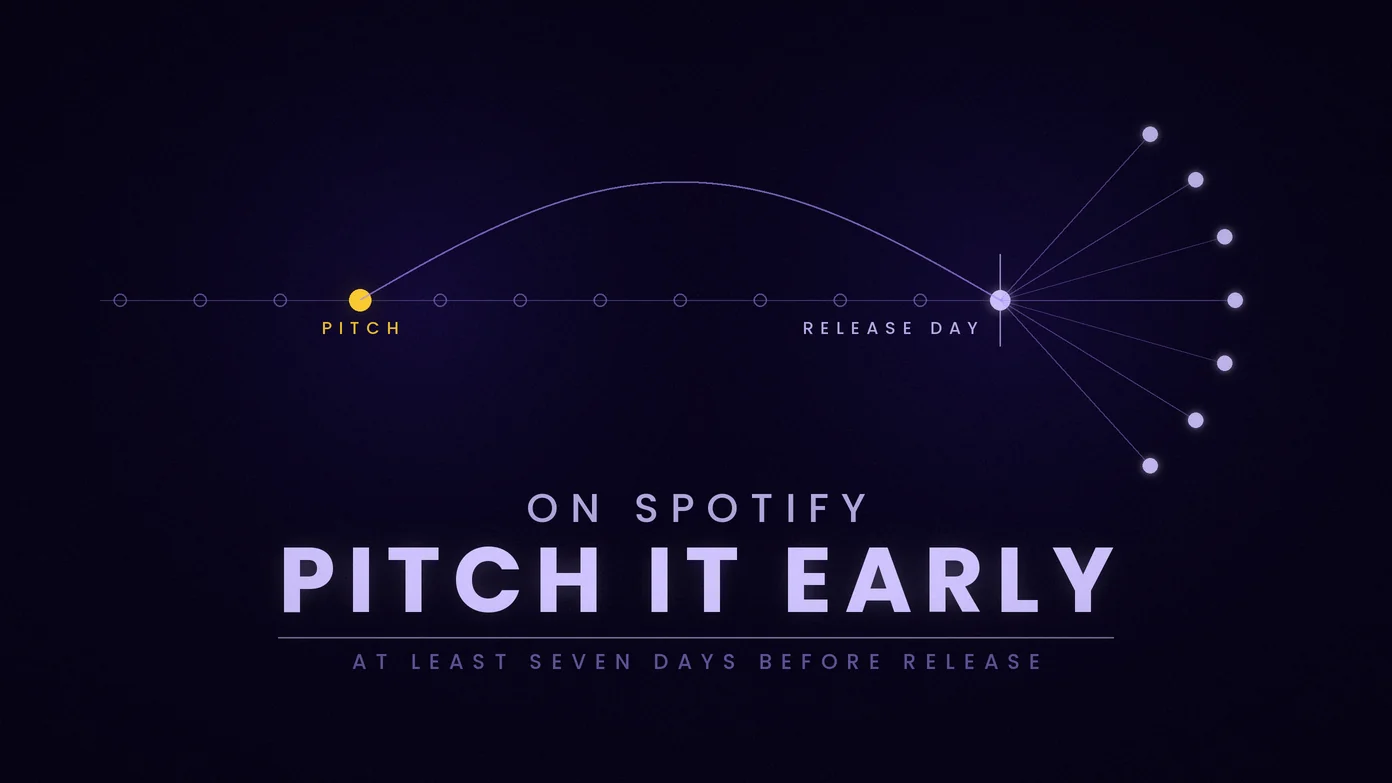
Spotify promotion starts inside Spotify. Pitch an unreleased song through Spotify for Artists at least 7 days before release, and Spotify adds it to the list its editors pick playlist songs from and to your followers' Release Radar; after that, promotion means bringing listeners to the track, through Spotify's own campaign tools and from outside Spotify, and reading what they did in Spotify for Artists. A Spotify SMM panel can add plays or saves to a track, or followers to an artist profile. This guide is plain about what that buys: a count on the service you order.
Start With Spotify's Own Tools
Spotify lists the ways it helps artists promote music on its own promotion page.
- Spotify for Artists: the dashboard where you manage your artist profile, pitch music and see who listens. Finish the bio, artwork and track details before you send anyone to the profile.
- Pitching: you can pitch one unreleased song at a time to Spotify's editors. A pitch puts the song on the list the editorial team picks from for its playlists, and a song pitched at least 7 days before release goes into your followers' Release Radar. Spotify notes that a pitch is no promise of a playlist spot.
- Followers: Spotify notifies your followers when you release new music or tour in their area, and songs from your new release go into their Release Radar, a playlist of new releases that updates every Friday.
Two tools are paid. Display campaigns, in formats such as Marquee and Showcase, put your music in front of the listeners most likely to press play, in Spotify's words, and Spotify Ads Manager runs audio and video ads to listeners on Spotify's free tier.
Bring Listeners From Outside Spotify
Outside Spotify, the work is getting people to press play:
- Post short clips of the song on TikTok, Instagram Reels and YouTube Shorts in release week, each with a link to the track.
- Ask fans to follow you on Spotify and save the track. Followers hear about your next release from Spotify itself.
- Send the song to independent playlist curators whose lists fit it, without paying for a placement.
- Cross-promote on Apple Music and YouTube Music to reach listeners who use other services.
The wider version of that organic half, the part no panel does for you, is in our guide to seven principles that last.
How Spotify Counts Streams for Royalties
Since April 2024, a track needs at least 1,000 streams in the previous 12 months to be included in Spotify's recorded music royalty pool. It also needs a minimum number of unique listeners, which Spotify does not publish, so that a few people cannot stream a track hundreds of times to qualify. Spotify adds that the stream counts in Spotify for Artists are not always the streams that earn royalties.
What Spotify Says About Paid Streams
Spotify's support page on paid third-party services is direct: services that advertise streams in return for payment violate its terms and conditions, and using them could result in your music being removed from Spotify. Its artificial streaming page says Spotify strictly prohibits using any third-party service that promises streams or playlist placement in exchange for money. Spotify cleans artificial streams out of its public numbers every day. When it confirms artificial streaming, it can withhold the royalties, correct public stream counts and, depending on how severe it is, remove the song from Spotify playlists.
Those rules cover any panel that sells Spotify plays, whatever Spotify service you order from it, and no delivery pace or order size changes them. Each platform sets its own rules, so no panel can promise how a platform will treat an account.
Where a Spotify Panel Fits
A panel sells Spotify engagement as separate services. You choose the service, pay the listed price and submit the link it asks for (a track, playlist or artist profile link), and the order adds to that one number. What Spotify counts from there, and whether anyone keeps listening, is Spotify's call and your music's, not ours.
What Each Service Adds
| Service | What the order adds |
|---|---|
| Plays | Streams to a track's play count |
| Playlist plays | Plays on a playlist you link, not on a single track |
| Saves | Saves to a track's save count |
| Monthly listeners | Listeners to the profile's monthly listener figure |
| Followers | Followers to the artist profile |
Spotify notifies followers when you release new music, but whether a bought follower listens is not something any panel controls. On our panel, each service states the terms that apply to it, including quality grade and refill coverage, before you order, and drip-feed is available on select services only: the order form shows whether a service has it. If you are comparing panels, our guide to choosing a panel for Spotify plays and followers covers what to check.
A Release Plan, Step by Step
- Before release: finish your Spotify for Artists profile, and deliver the music early enough to pitch it at least 7 days before release day.
- The pitch: pitch the single. It goes to Spotify's editors, and it becomes the song your followers get in Release Radar.
- Release week: post your clips and links outside Spotify, and ask fans to follow and save.
- If you add a panel order: choose the service on its stated terms rather than its price.
- After release: read Spotify for Artists, not the panel. The panel tells you an order was filled; your monthly listeners, your followers and the playlists each song is added to tell you what happened after.
What Our Order Data Shows
Boostero is an SMM panel, and our records show which Spotify services our customers order. In the order data behind our State of Social Media Growth 2026 study, January 2025 to June 2026, plays were the kind of Spotify service our customers ordered most, and followers came second, whether counted by order, with each account counted once, without the largest account or without the ten largest. Services were classed by their names: plays include playlist, search and podcast plays, and followers include playlist followers.
That is a fact about our customers' orders, not a measure of what works: our records say nothing about what Spotify does with an order once it is filled.
Putting It Together
Promotion on Spotify runs through Spotify's own tools first: Spotify for Artists, a pitch at least 7 days out, and the followers who get a song from your next release in Release Radar. The rest is bringing people to the track and reading what they do in your own dashboard. A panel adds a count to the one service you order; what Spotify does with it is Spotify's call, not ours.
Frequently Asked Questions
How do I promote my music on Spotify?
Start inside Spotify: join Spotify for Artists, finish your profile and pitch an unreleased song at least 7 days before release, which puts it in front of Spotify's editors and into your followers' Release Radar. Then bring listeners from outside Spotify through short clips and your fans and, with a budget, use Spotify's display campaigns or Ads Manager.
How do I get my song on Release Radar?
Your followers get songs from your new release in their Release Radar, a playlist that updates every Friday. If you pitch a song at least 7 days before release day, Spotify includes that song; if you do not pitch one, Spotify picks which songs from the release go in.
How many streams do I need to earn royalties on Spotify?
Since April 2024, a track needs at least 1,000 streams in the previous 12 months, from a minimum number of unique listeners that Spotify does not publish, to be included in Spotify's recorded music royalty pool.
Why do followers matter on Spotify?
Spotify notifies your followers when you release new music or tour in their area, features you in their personalized sections of the app, and puts songs from your new release in their Release Radar, a playlist that updates every Friday.
What does a panel add on Spotify?
It sells Spotify engagement as separate services, such as plays, saves, followers, monthly listeners and playlist plays. You choose a service, submit the link it asks for (a track, playlist or artist profile link) and pay the listed price, and the order adds to that number. What Spotify does from there is Spotify's call, not ours.