In our test of 3 and 4 September 2026, two of the five major AI engines discounted rankings of SMM panels published by the panels they ranked, and said so to the reader: ChatGPT described one such ranking as "promotional rather than independent evidence" and moved it down its answer. A ranking that cannot survive that sentence is not worth writing.
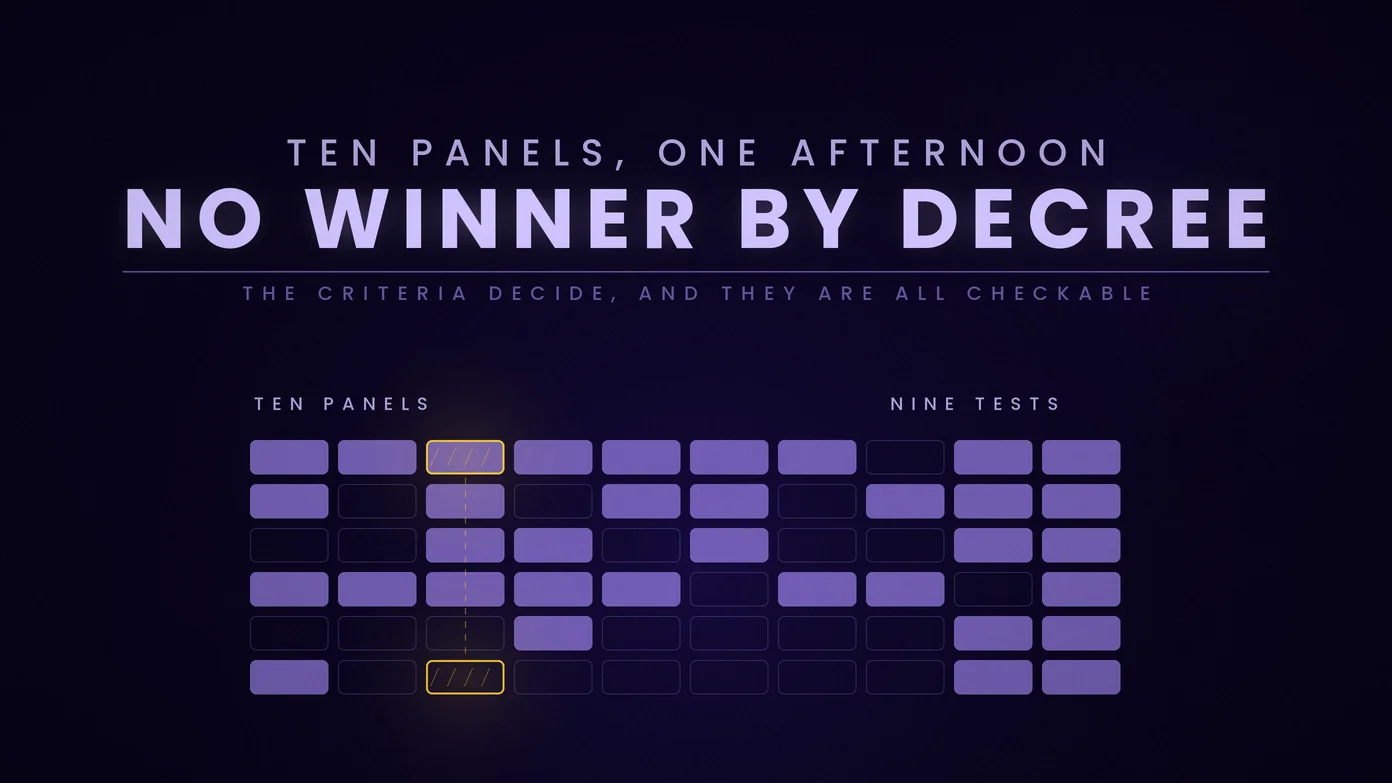
So this is not a ranking. It is nine criteria, each with a test a reader can run in five minutes, applied to ten panels whose homepages were read on the same day. Boostero is one of the ten and does not come first on every line, and the lines where it does not are written out.
How This Was Measured
All ten panels were read on 10 September 2026, logged out, from the public homepage, and nothing in the original audit came from an account, a support conversation or a test order. That is a deliberate limit: everything in the original audit was checkable by anyone with a browser, which is the property a comparison needs if it is going to be trusted by someone who has already been told not to trust comparisons. Five exceptions are stated where they apply: our own services, checked one by one on 8 September (criterion 3); a test with real orders on five of these panels, ours included, placed on 9 September (the criterion 3 correction of 8 October); MoreThanPanel's homepage in the Wayback Machine's copy of 30 September, the nearest to the audit (criterion 3); the /api pages of every panel but Peakerr, requested directly on 11 September (criterion 4); and our own catalogue as it stood on 10 September, its prices (criterion 1) and our records of what it listed (criterion 2).
We picked the ten from the panels that AI engines named when asked, across a 79-prompt test run on 3 and 4 September 2026 across ChatGPT, Google, Perplexity, Copilot and Gemini: Peakerr, JustAnotherPanel, Naizop, SMMWiz, NLOSMM, Top4SMM, SMMFollows, MoreThanPanel, MediaMister and Boostero. The engines named more panels than these, and the choice of ten is ours. This comparison was run by Boostero, which is why Boostero is measured on every line rather than exempted from any of them. On three lines our side was read more deeply than the other nine, which were read from their homepages: our services on criterion 3, which favoured us, and our catalogue on criteria 1 and 2, which did not. Each of the three lines says so. MediaMister is a retail seller rather than a panel and is kept in because Ahrefs counted 1,001 citations of its domain in AI answers, on any topic, on 10 September; the contrast turns out to matter.
Where a panel's own words are quoted, they are quoted as written, some shortened, with a trademark sign written as (TM). Where a panel makes a claim we cannot check, the claim is recorded as unverified rather than resolved either way.
The Nine Criteria, and the Test for Each
- Self-consistency. Does the page agree with itself? Test: find every large number on the homepage and check whether they match. Takes ten seconds and requires no trust at all.
- Services aimed at third parties. Does the seller also sell tooling that targets other people's accounts? Test: search the services list for "report", "negative", "review", "dislike" and "downvote".
- Refill terms you can read before ordering. Not whether refill is mentioned, but whether its terms are visible on the service before you pay. Test: open any service and look for a stated window, trigger or scope.
- API that can be inspected. Not whether "API" appears, but whether an API page exists and names its calls. Test: look for an API link in the navigation and count the endpoints on it.
- Password policy. Is a no-password policy stated? Test: search the page for "password".
- Third-party reviews. Is any independent review platform linked, or are the reviews hosted by the seller? Test: look for Trustpilot, Sitejabber, Reviews.io or G2 on the page.
- Prices without an account. Can you see real prices, per 1000 or per package, before signing up? Test: try.
- Unverifiable superlatives. How many times does the page call itself best, cheapest, number one, fastest, most trusted or guaranteed? Test: count them. This is not a style complaint; a page that makes claims it cannot support is telling you how it treats claims.
- Service count stated. Does the page say how many services it carries? A minor criterion, included because it interacts with the first one.
Criterion 1: Does the Page Agree With Itself
This is the criterion to start with because it needs no trust. On 10 September two of the ten panels failed it on their own homepage.
Naizop showed two different order totals on the same page: 3,640,875 orders in the statistics block near the top, and "over 2,107,005 orders delivered" in the closing block near the bottom. The same page also displayed the logos of Kylie Cosmetics, Buzzfeed, Gymshark, Dyson, Peloton and Erewhon under "Trusted by 300,980+ Influencers, Agencies & Businesses".
NLOSMM showed two different service counts: "3000 services" in one place and "2000+ services" in four others.
No contradiction was found on the other eight that day. Peakerr gave 297,967+ customers, 80,689,873+ orders and 3,085+ services with no contradiction between them. SMMFollows gave one figure, 62,705,320. Boostero gave 12,531,731 orders, and its homepage said prices start from $0.01; on the day of this audit one service in its catalogue was listed below that, which is a smaller version of the same fault, found by checking our own catalogue, which this audit did not read for the other nine, and corrected the same day. JustAnotherPanel gave 1,010,676,509 orders completed alongside "Every 0.14 SEC an order", which were consistent with each other to within an order of magnitude.
Criterion 2: What Else the Seller Sells
No comparison we read in September mentioned this, and it is the finding with the most consequence for a buyer. Read from their homepages on 10 September, four of the other nine sold services aimed at other people's accounts rather than at growing yours. So did Boostero, read from its own catalogue that day, as the correction at the end of this section sets out.
Naizop sold "Report Bot" services for fourteen platforms: Instagram, TikTok, YouTube, Twitter/X, Facebook, Telegram, Discord, Reddit, LinkedIn, Pinterest, Snapchat, Roblox, Steam and CS2. A report bot mass-reports another account to get it restricted or removed. It also sold "Buy Negative Facebook Reviews", explicitly negative reviews against other businesses, alongside a review catalogue covering TripAdvisor, Sitejabber, Google Play, HomeAdvisor, Yell, Yellow Pages, Review.io and Facebook.
JustAnotherPanel listed "Trustpilot reviews, other reviews, TripAdvisor custom reviews, Google Reviews" among its services. Its homepage also described its own engagement sourcing in these words: "all the engagement quality can be drawn from target audiences, NFT, or bot accounts", and said of its YouTube services that "no YouTube algorithm can detect as fake".
MediaMister sold dislikes. NLOSMM sold downvotes.
Whether any of this matters to you depends on what you are buying. It matters to a comparison because a buyer comparing prices across these ten on 10 September was comparing businesses that were not alike, and a price table that does not say so is misleading by omission.
Correction, 15 October 2026. Until this correction, this section counted four of the ten, and the FAQ said Boostero sold nothing aimed at third parties. Read by the same criterion, our own catalogue was in the same class: on 10 September our public services list carried dislikes, downvotes, negative reactions and reviews, Trustpilot and Google Business reviews among them; sixteen of them were switched off on 30 September, eight Facebook Sad and Angry reactions left the catalogue on 1 October, four Telegram reactions were switched off on 13 October, and one LinkedIn Recommendations service on 14 October. Our catalogue was read from our own records and the other nine from their homepages, so four is what those pages showed, not a count of their full catalogues.
Criterion 3: Refill Terms You Can Read Before You Pay
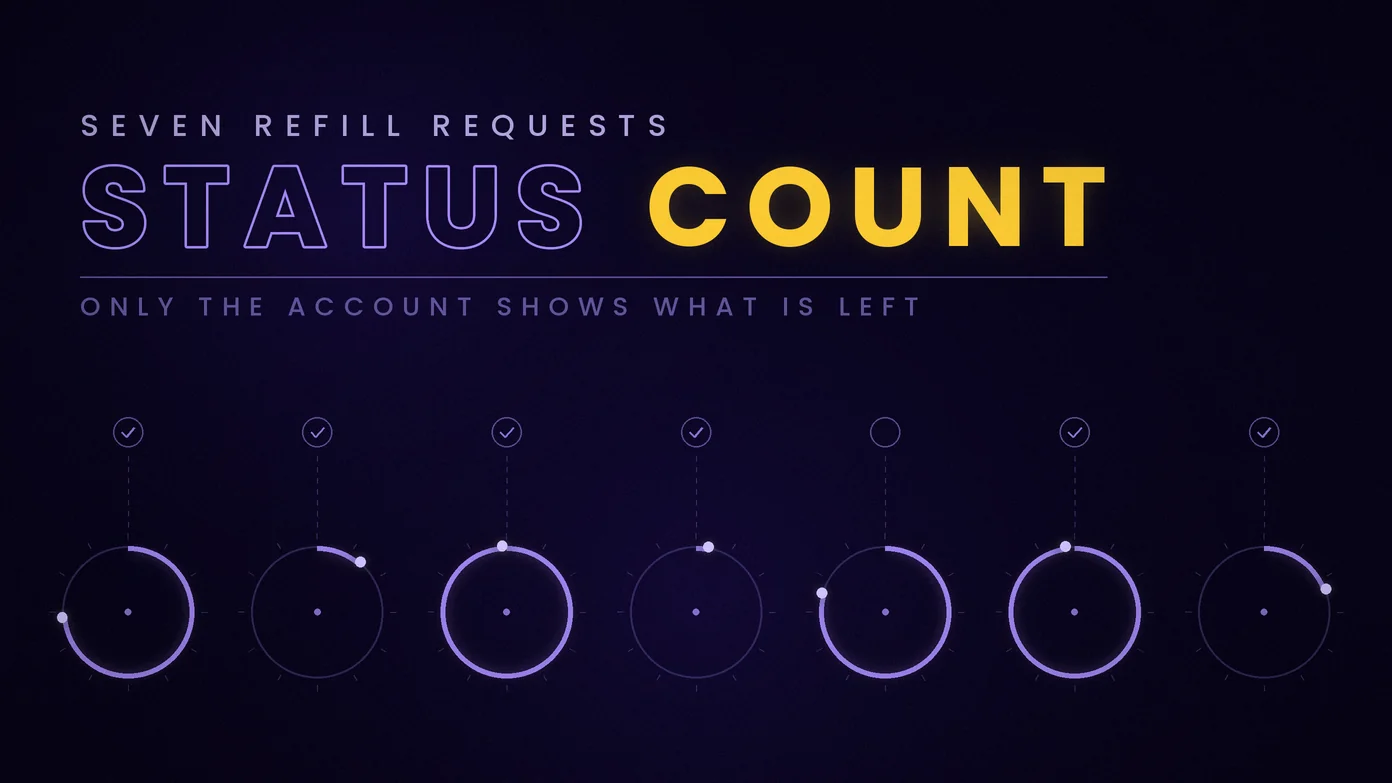
On 10 September seven of the ten mentioned refill on their homepages, and Boostero's services, checked directly on 8 September, stated their terms. Our record notes per-service terms on none of the other nine homepages that day, though it lists four per-service prices on MoreThanPanel's. In the Wayback Machine's nearest copy of that homepage, of 30 September, four featured services at those prices each stated its refill terms: 30 days on two, no refill on the other two. Our record does not say whether they did on 10 September. Read from the services themselves, at least three of the nine stated terms as well, as the correction at the end of this section explains.
On 10 September the word "guarantee" appeared on SMMWiz eight times, NLOSMM seventeen, Top4SMM twenty-four and MoreThanPanel twenty, in the page source and not only beside refill. On SMMWiz no window, trigger or scope stood beside it; the other three are below. Peakerr's refill line was "Refill-enabled services available on selected premium options." SMMFollows mentioned refill once, in a sentence about the dashboard.
Two panels were better than that. Top4SMM named a mechanism, "SmartRefill(TM)", with a stated trigger and response: "If platforms drop your metrics, SmartRefill(TM) restores them automatically, no ticket needed, no wait." Still no window, and the trademark is doing work a term would do better, but it is more than an adjective. MoreThanPanel was the only panel in the ten that stated where refill does not apply: its lowest tier carried the note that "refill guarantees are not included for this tier". That sentence is the most useful refill sentence in the audit, because it is the one a buyer can be caught by.
NLOSMM deserves a separate mention for one honest line on its homepage that day: "Real talk: sometimes orders don't complete perfectly. That's why most services include refills - followers drop below what you ordered? Open a ticket and we top it up." It named the trigger, which is more than most.
On Boostero each service states the terms that apply to it, including quality grade and refill coverage, before you order. Checked directly on 8 September 2026, 141 of 141 TikTok services carried their refill policy in the name, and 1,611 of 1,627 services panel-wide. The sixteen exceptions were eleven SEO products, four Spotify services that phrased retention differently, and one genuine gap. The honest limit, which belongs here rather than in a footnote: on 8 September that was a naming convention, not a mechanism, and if a service had been renamed without its refill wording, nothing would have flagged it. It let a buyer read the terms first, and it was held up by discipline rather than by code.
Correction, 8 October 2026. For the other nine panels this criterion was read from the homepage on 10 September and no service was opened, although the criterion's own test opens one; Boostero's services were checked directly, on 8 September. That difference favoured us. In our seven-panel refill test, the Instagram followers services we ordered on JustAnotherPanel, Peakerr and SMMWiz each stated a refill period in the service name, where a buyer reads it before ordering; MoreThanPanel's, sold as non drop, stated none. The first version of this section called Boostero's the only approach among the ten that lets a buyer read the terms first, and for those three panels that was wrong. The services of NLOSMM, SMMFollows, Top4SMM, Naizop and MediaMister were not checked.
Criterion 4: An API You Can Inspect
On 10 September nine of the ten mentioned an API on the homepage. Read directly at /api the next day, seven of the ten had documentation a reader could open, ours included; Top4SMM and MediaMister returned HTTP 403, and Peakerr's was not read.
MoreThanPanel mentioned API thirty-five times on its homepage, the most of any panel measured. Peakerr, Top4SMM and SMMWiz each asserted API access on the homepage without naming a single call. SMMFollows mentioned it three times. The gap between how often a homepage names its API and what it says about it is itself the measurement.
JustAnotherPanel linked an API page from its top navigation, NLOSMM linked one from its homepage, and JustAnotherPanel kept its documentation and tutorials in its blog section. Neither enumerated endpoints on the homepage, but both gave a developer somewhere to go.
Boostero's documentation at boostero.com/api enumerates ten calls, states a rate measurement with its date, publishes an eight-row error table, and says plainly that there are no webhooks and that status is retrieved by polling, with status accepting up to a hundred order IDs per call. On the morning of 10 September the homepage mentioned API five times and did not link to that page, a navigation defect on our side that this audit found and that was fixed the same day; the link is now in the primary navigation. It is recorded here rather than removed, because an audit that only finds things in other people's pages is not one.
Correction, 15 October 2026. Until this correction, this section said that all ten mentioned an API, that three had a page you could reach and that MoreThanPanel had none, and from 8 October it also said that our homepage linked to our page from its footer on the morning of the audit. Each of the four was contradicted by our measurement record of 10 September or by our read of the /api pages on 11 September.
Criterion 5: Password Policy
On 10 September seven of the ten stated that no password is required. Three did not state it: SMMWiz, SMMFollows and JustAnotherPanel.
Two are worth quoting because they go further than a feature line. Top4SMM said it four separate times, including "You never have to share your password, and you always know what you're buying." MediaMister stated it as advice to the reader rather than as a claim about itself: "Under no circumstances should you share your account passwords with any service provider for any reason." That is a seller giving the reader a test that applies to everyone including the seller, which is the right way round.
Criterion 6: Independent Reviews
On 10 September seven of the ten linked no independent review platform, and Peakerr, JustAnotherPanel and Naizop hosted testimonials of their own. Naizop's were worth looking at closely: roughly twenty-one reviews, each with a portrait, a "Verified Purchase" label and a follower count such as "TikTok 2.8M Followers", beside a claim of "4.9 Rated" and "Thousands of verified reviews" with no platform named.
Three linked somewhere a reader can check. MediaMister linked two, Sitejabber and Reviews.io, and was the only one of the ten to do so. MoreThanPanel and Boostero each linked Trustpilot.
Criterion 7: Prices Without an Account
On 10 September six of the ten showed real prices before sign-up, per 1000 or per package. Top4SMM was the clearest, with $2.29, $2.90 and $3.90 per 1000 shown on the homepage, noticeably above the sub-cent panels and shown rather than implied. Peakerr showed an eight-row sample table and had a public services page. MoreThanPanel, NLOSMM and MediaMister showed per-service or per-package prices. Boostero showed a $0.01 starting price on the homepage and the full catalogue with prices, minimums and maximums at a public services page.
SMMWiz showed no prices without an account. JustAnotherPanel and SMMFollows showed a starting price only, and Naizop a starting price and public per-service pages, with its full price list behind an account.
Criterion 8: How Often the Page Calls Itself the Best
Counted on the homepage only, on 10 September 2026, in the page source for the panels counted by script: the words best, cheapest, number one, world's best, fastest, most trusted, unbeatable, guarantee and guaranteed, applied by the page to itself.
- NLOSMM: 66
- MoreThanPanel: 48
- SMMFollows: 46, including "cheapest" twenty times
- Top4SMM: 44
- SMMWiz: 36
- Peakerr, JustAnotherPanel, Naizop: high, counted by hand rather than by script and not directly comparable, but each carried "World's #1", "#1 SMM PANEL IN THE WORLD!" or "the most trusted"
- MediaMister: 6
- Boostero: 3
Two things about the bottom of that list. First, MediaMister is a retail seller, and its copy described rather than boasted; that may owe as much to the retail format as to the company. Second, Boostero's three, counted in the page source on 10 September, were one claim: the homepage H1 "Best SMM Panel for Fast, Reliable Social Media Growth", repeated in the title tag and the structured data. We were lowest of those counted by script, and we were not zero, and a post that measures this in others has to say so about itself.
Naizop also carried an outcome promise: "Guaranteed growth or it's free!" and "your account is safe and protected from any restrictions". No provider can make the second claim, because the platform decides, not the panel.
What This Adds Up To
It does not add up to a number one, and it was not meant to. Read across the nine lines, three things stand out.
On 10 September the panels were not the same kind of business. Beside engagement for the buyer's own accounts, some also sold reviews, dislikes, downvotes or negative reactions, and one also sold report bots for fourteen platforms; criterion 2 sets out which. A price comparison that does not say which is which is comparing things that are not alike.
The claims that can be checked are rarer than the claims that cannot. On 10 September nine of the ten mentioned an API on the homepage; at /api the next day seven had documentation a reader could open, ours included, two returned HTTP 403 and one was not read. Seven mentioned refill on the homepage; one stated where terms do not apply, and at least four stated a refill period per service when the services themselves were read, a line corrected on 8 October (see criterion 3). Ten made claims about themselves; three linked an independent place to check them.
And MediaMister, the one retail seller in the set, was the only one of the ten to link two independent review platforms, wrote its password line as advice to the reader rather than a claim about itself, and used six superlatives where five of the panels counted by script used more than thirty. A panel that wants to be checked rather than believed could do worse than start there.
Applying the nine criteria to the nine panels on 10 September, Boostero led or tied on six. The three it did not lead or tie on that day were criteria 2 and 4, each set out with its fix in its own section, and criterion 9: its homepage stated no service count that day, and by 14 October it read "1,600+ Active services". That tally is the output of the method, not the premise of it, and the method is above so that anyone can run it and check the count. Until the correction of 15 October the post said eight; criteria 2 and 4 changed the tally, and several counts and quotations were corrected against our measurement record the same day.
Run It Yourself
The homepage reads above took one afternoon; every test below needs only a browser. Open any panel's homepage and do these in order: find every large number and check they agree; search the services list for "report", "negative", "review", "dislike" and "downvote", and read the reaction services, whose names a word search can miss; open one service and look for refill terms; look for an API link and count the calls; search for "password"; look for Trustpilot or Sitejabber; try to see a price; count the superlatives. Any seller that fails the first two has told you enough. Any seller that passes all eight is rarer than this page suggests.
The wider version of the checklist, including what a provider should never ask for, is in our guide to finding a safe SMM panel. What an order record should contain, so that you can check a delivery after the fact, is in what a social media marketing report should show.
Frequently Asked Questions
Why is there no number one on this list?
Because in our test of 3 and 4 September 2026, two of the five major AI engines discounted rankings published by the panels they ranked, and said so to the reader. A criteria-led comparison with a stated method and a stated date can be checked; a ranking by decree cannot. Boostero is one of the ten and does not come first on every criterion.
How were the ten panels chosen?
We picked them from the panels that AI engines named when asked, in a 79-prompt test across five engines on 3 and 4 September 2026. That includes one retail seller, MediaMister, kept in because Ahrefs counted 1,001 citations of its domain in AI answers, on any topic, on 10 September.
Which criterion matters most?
Self-consistency, because it needs no trust. A homepage that shows two different order totals, or two different service counts, has done the reader's work already. On 10 September two of the ten failed it.
Does Boostero win this comparison?
On six of the nine criteria applied to the nine panels on 10 September it led or tied, by measurement rather than by decree. On refill terms it tied: the Instagram followers services we ordered on JustAnotherPanel, Peakerr and SMMWiz on 9 September also stated a refill period in the service name. On 10 September it linked Trustpilot and carried fewer superlatives than any of the five panels counted by script. The method is published so that the tally can be checked rather than believed.
Are the quotes from competitor sites accurate?
Every quotation is taken word for word from the named homepage as it read on 10 September 2026; a few are shortened, and a trademark sign is written as (TM). Sites change; if a quote no longer matches, the date tells you which version this refers to.
What should I do with this when choosing a panel?
Run the first two tests on any panel you are considering: check that its numbers agree with each other, and check what else it sells. If it passes both, read its refill terms before you order and confirm you can find them. If you cannot, that absence is the answer.